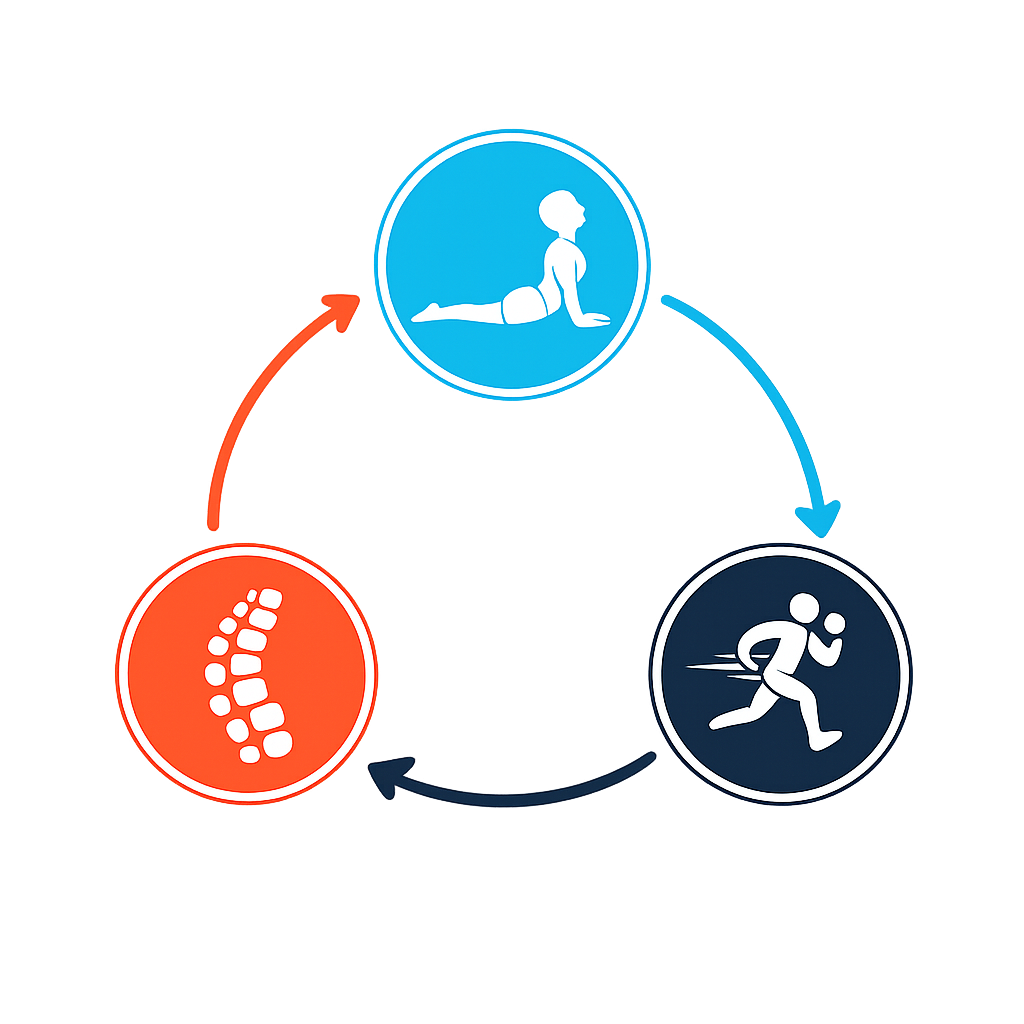
The Stabilizing Gap
DNS identifies where the deep stabilizing system has stopped firing correctly. Without that system, the joint cannot centrate: it cannot find and hold the position that distributes load evenly.
The tissue heals. The pain settles. Then the load returns, the pattern runs the same way it always did, and the same structure takes the hit. That cycle is not random, and it often responds to a different kind of work.
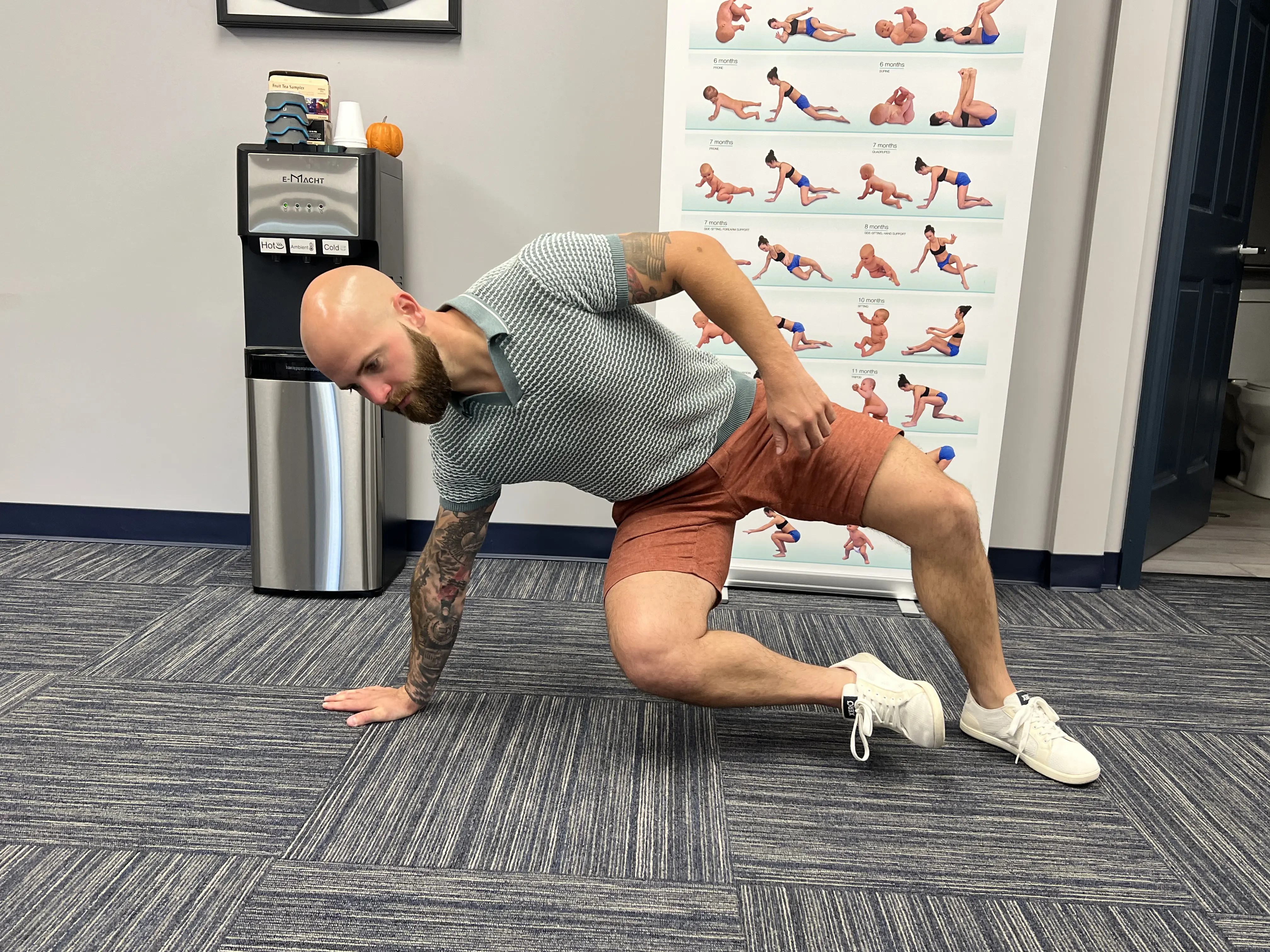
Pain is a signal. When the signal quiets, it's easy to assume the problem is gone. But the movement pattern that loaded the tissue in the first place hasn't changed. The shoulder still reaches the same way. The hip still drops at midstance. The spine still loads asymmetrically under effort. The tissue heals, and then it takes the same load, in the same direction, again.
That's the reinjury cycle. Not bad luck. Not a weak structure. A pattern that was never addressed.
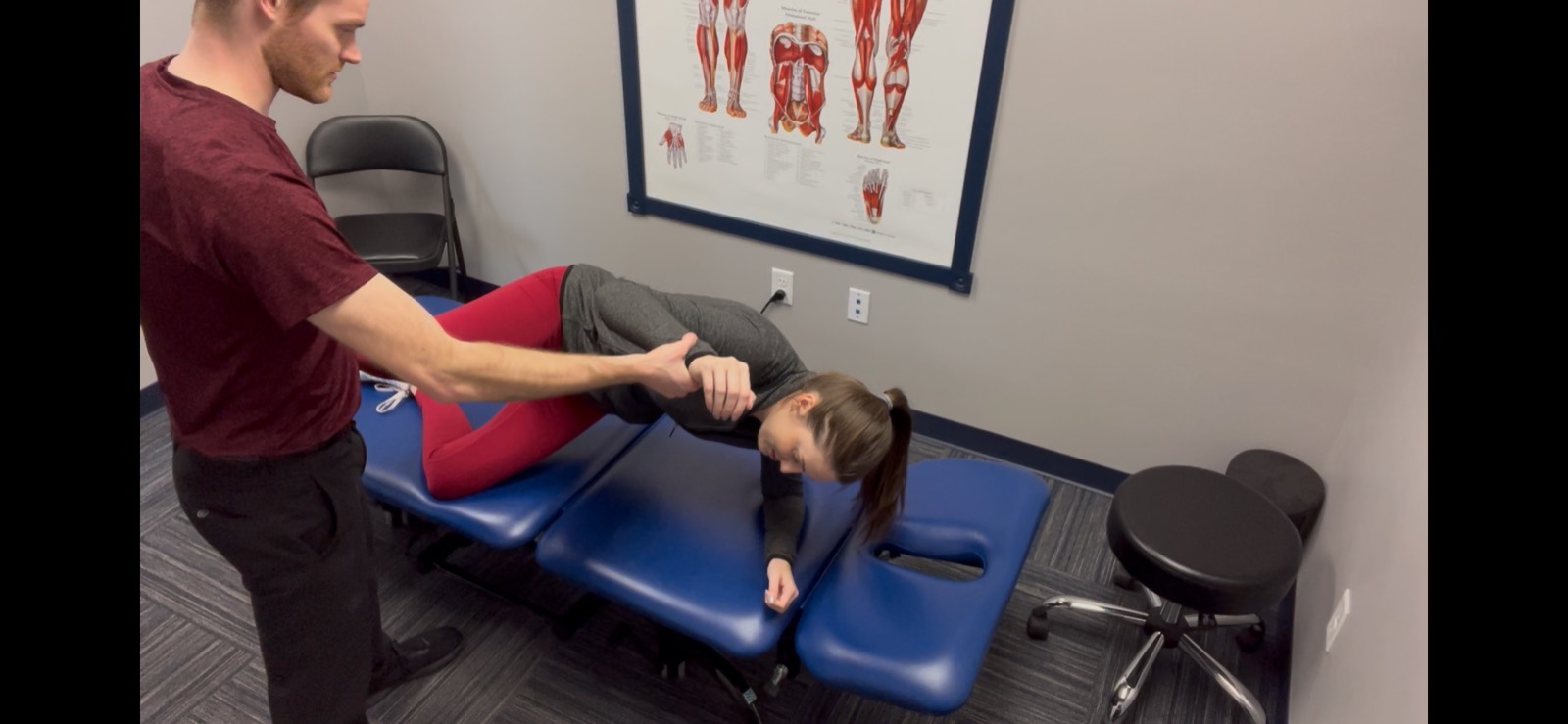
DNS restores the neuromuscular foundation a joint needs to hold its position under load, using the same developmental movement sequences the body was first built on.

DNS identifies where the deep stabilizing system has stopped firing correctly. Without that system, the joint cannot centrate: it cannot find and hold the position that distributes load evenly.
Working in specific developmental positions, DNS rebuilds synergistic muscle activation and intra-abdominal pressure. The joint can then centrate, and the brain registers what the correct pattern actually feels like.
A pattern the brain has felt is a pattern it can begin to hold. Centration through DNS is the precondition for the movement design work that follows: the pattern has to exist before it can be encoded under load.
Once the correct pattern is established at the joint level, the question becomes how it holds when load, fatigue, and competition pressure return. Instruction fails that test. A pattern built through coaching cues lives in declarative memory, and it breaks down exactly when you most need it to hold. Constraint-based tasks take a different path: the body solves the movement problem on its own, and the pattern embeds without conscious scaffolding.
The goal here isn't to teach you to think about your movement. The right constraint, in the right position, makes the correct pattern the path of least resistance. Your body already knows how to move well. Rehab restores the conditions where it does.
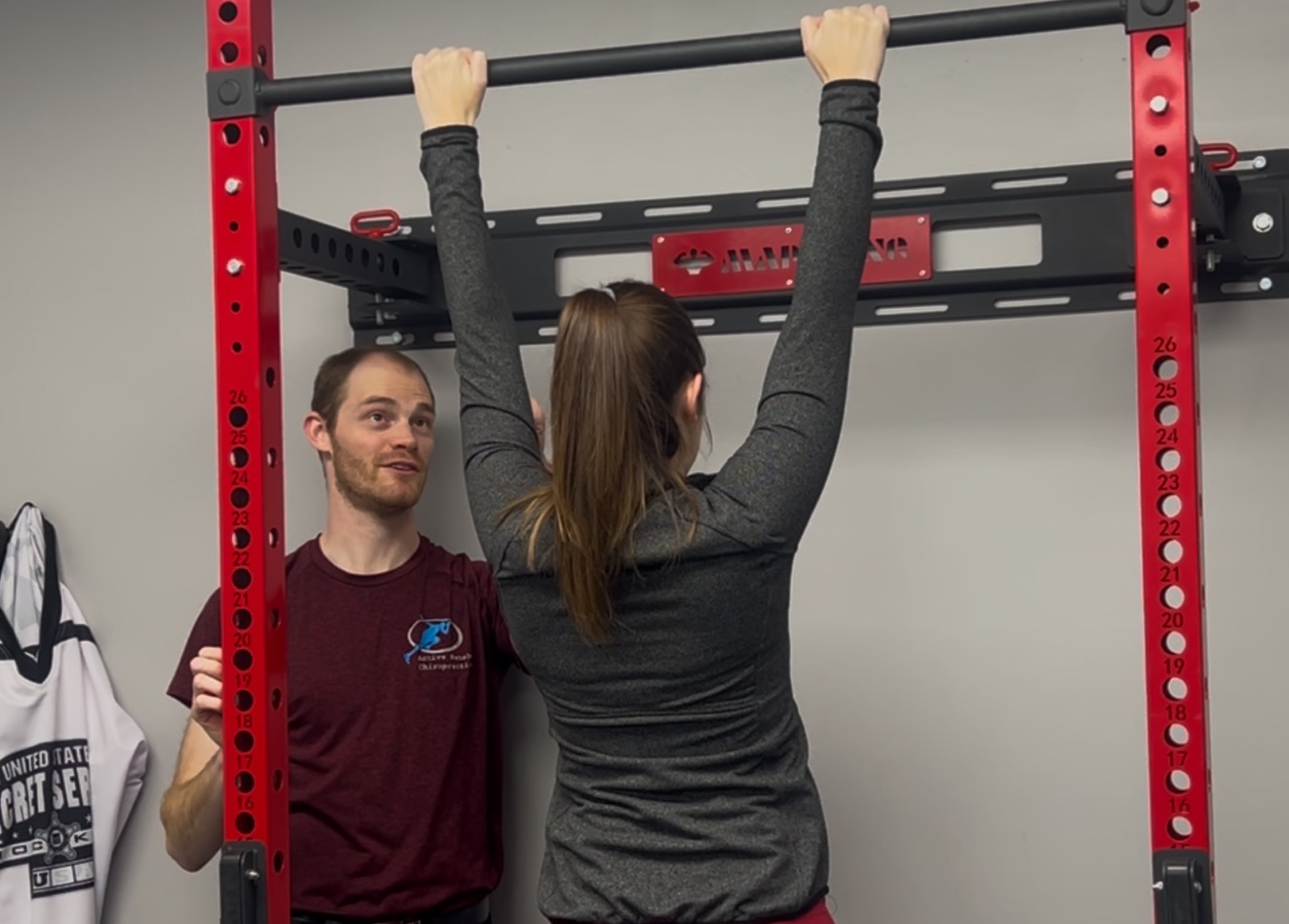
Return to form is a specific standard, not a clinical category. The measure isn't whether the pain is gone or the imaging is clean. It's whether you're doing what you were doing before — all of it, without modifying around it, without bracing for it. That looks different depending on what you're returning to.
Skating a full shift without the hip tightening at the end of the period. Running without the knee dropping inward on the downhill. Pitching through a full game without the shoulder compensating on release.
Eighteen holes without the low back locking up on hole twelve. Getting through a full day of yard work and not paying for it the next morning. Keeping up on the floor with a two-year-old without the knee giving you a reason to stop.
Functional rehab doesn't work in isolation, and here it doesn't have to. The manual therapy, the adjustment, and the movement work are sequenced together. Each session builds on what the previous one established. Tissue that moves better responds better. A joint that's centrating correctly can be loaded progressively without breakdown.
That sequencing is deliberate. Each layer is designed to support the others: tissue restriction cleared before movement is reloaded, joint mechanics addressed before pattern work begins. When the sequence holds, the layers compound rather than compete.